
Biometric Exam Reforms for Matric and Inter Exams
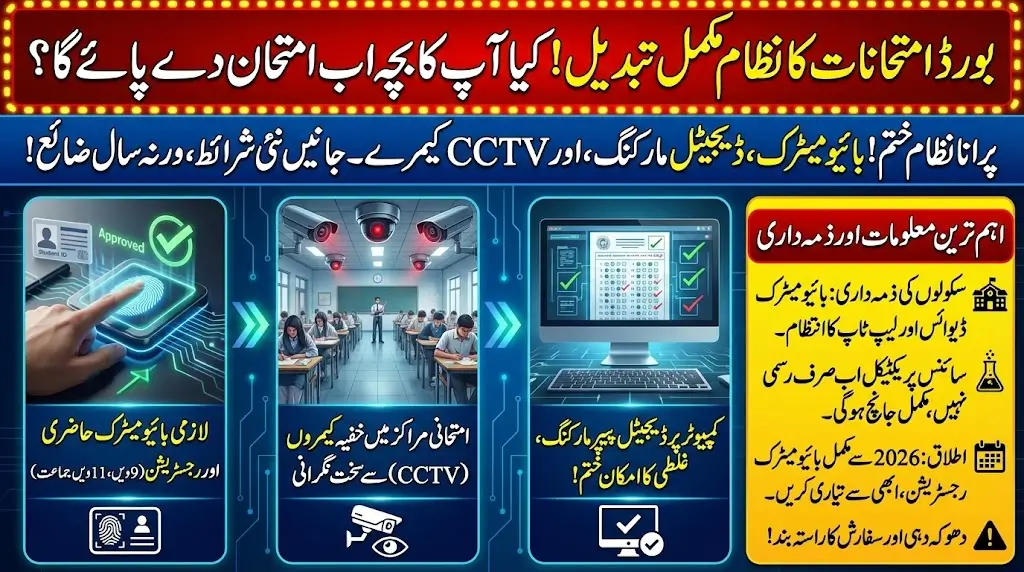
The Board Committee of Chairmen of all nine educational boards in the province has approved major examination reforms. These reforms aim to modernize the exam system and improve transparency. The traditional manual system of paper checking and monitoring will be discontinued.
The new framework applies to both matriculation and intermediate annual examinations. Authorities plan to reduce human error and increase fairness through technology-based solutions.
Key reform goals include:
- Ending manual paper marking
- Improving exam transparency
- Strengthening monitoring systems
Hajj Biometric Verification Deadline Extension 2026 Check Now the Date
Mandatory Biometric Attendance System
Biometric attendance will become compulsory for all candidates appearing in exams. This rule applies to both male and female students. Biometric verification will be required at examination centers.
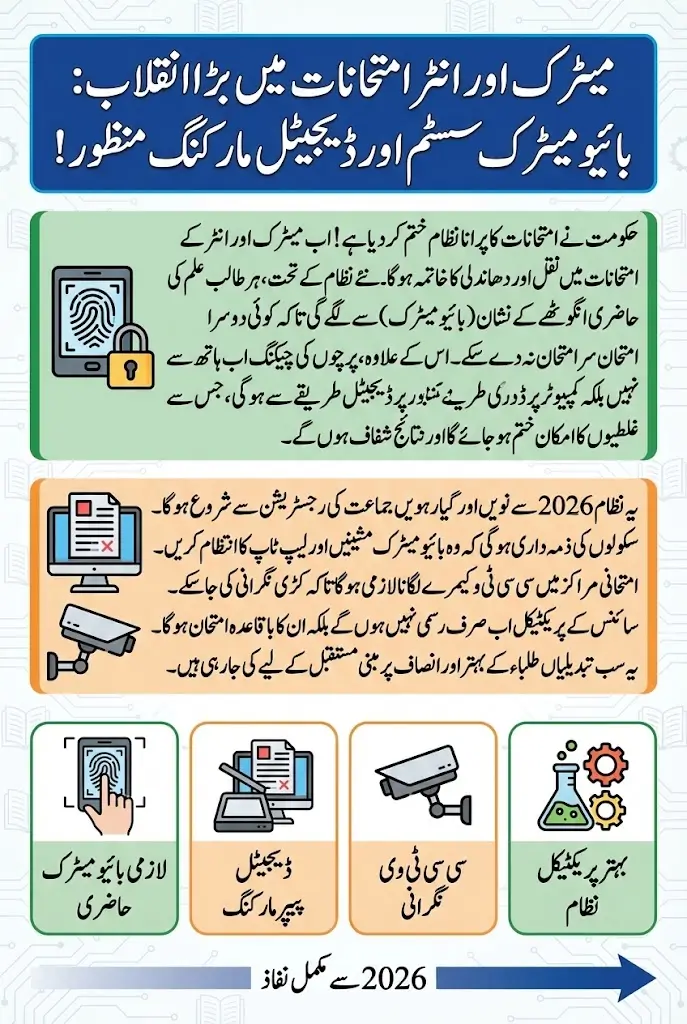
Authorities will use thumb impressions to confirm student identity. This system will help prevent impersonation and unauthorized entry.
Biometric attendance features include:
- Mandatory thumb verification
- Entry control at exam centers
- Identity confirmation for all candidates
Biometric Registration for Class 9 and Class 11
From 2026, students registering for Class 9 and Class 11 must provide thumb impressions. This biometric data will be stored for future verification. The process will begin at the registration stage.
This year, the reforms will be partially implemented. Biometric registration for these classes will serve as the first phase.
Registration requirements include:
- Thumb impressions at admission
- Biometric data storage
- Gradual implementation plan
MCB Suzuki Auto Financing Launched Under Car4U and Fleet4U Programs Check Now
Role of Schools in Biometric Arrangements
Government and private schools will manage biometric arrangements. Schools must provide biometric devices and laptops. This responsibility applies to all affiliated institutions.
Examination boards will only provide the required software. Schools must ensure equipment availability before exams.
School responsibilities include:
- Providing biometric machines
- Arranging laptops
- Ensuring system readiness
Digital Paper Marking System Introduced
Examination boards will fully shift to digital paper marking. Answer sheets will be scanned after exams. Markers will assess papers on computer screens.
This change aims to improve accuracy and speed. It also reduces the risk of manual calculation mistakes.
Digital marking benefits include:
- Computer-based evaluation
- Faster result processing
- Reduced human error
Benefits of the New Assessment Framework
Officials believe the reforms will eliminate incorrect marking. Calculation errors will be minimized. Transparency in results will improve.
Digital monitoring will also help standardize evaluation. Students will benefit from fairer assessments.
Key benefits include:
- Accurate marking
- Transparent evaluation
- Standardized grading
9999 Web Portal Pakistan Online Registration CNIC Check & Complete Guide
Science Practical Examination Reforms
Authorities have upgraded the science practical exam system. Practical exams will now involve proper assessments. They will no longer be treated as a formality.
This change aims to test real skills. Students will be evaluated on performance and understanding.
Practical exam improvements include:
- Skill-based assessments
- Structured evaluation
- Increased exam credibility
CCTV Monitoring at Examination Centers
CCTV cameras will be mandatory at all examination centers this year. This step will enhance exam security. Monitoring will help prevent unfair practices.
The initiative applies to all boards. Authorities are implementing it in phases.
CCTV monitoring includes:
- Continuous surveillance
- Improved exam discipline
- Enhanced security
Rawalpindi Division Examination Setup
In Rawalpindi Division, 400 exam centers have been established. These centers will host matric and intermediate exams. CCTV installation has already started.
The cost of CCTV cameras is being funded by students. Authorities aim to complete installations before exams begin.
Rawalpindi setup highlights include:
- 400 examination centers
- CCTV installation underway
- Student-funded security system
Key Reform Summary Table
| Reform Area | Details |
|---|---|
| Biometric Attendance | Mandatory for all candidates |
| Registration Classes | Class 9 and Class 11 |
| Paper Marking | Fully digital |
| Practical Exams | Proper assessment system |
| CCTV Monitoring | Mandatory at all centers |
Implementation Timeline Table
| Phase | Reform Activity |
|---|---|
| 2025 | Partial implementation |
| 2026 | Full biometric registration |
| Ongoing | Digital marking and CCTV |
FAQs
What are biometric exam reforms?
They are technology-based changes to exams. They include biometric attendance and digital paper marking.
Which students must give thumb impressions?
Class 9 and Class 11 students must provide thumb impressions during registration.
Who will arrange biometric devices?
Government and private schools will provide devices and laptops.
Will manual paper checking continue?
No, answer sheets will be scanned and marked digitally.
Are CCTV cameras compulsory at exam centers?
Yes, CCTV cameras are mandatory at all examination centers.
8171 Taleemi Wazaif Parents’ Simple Guide 2026 to CNIC Check and Student Payments