
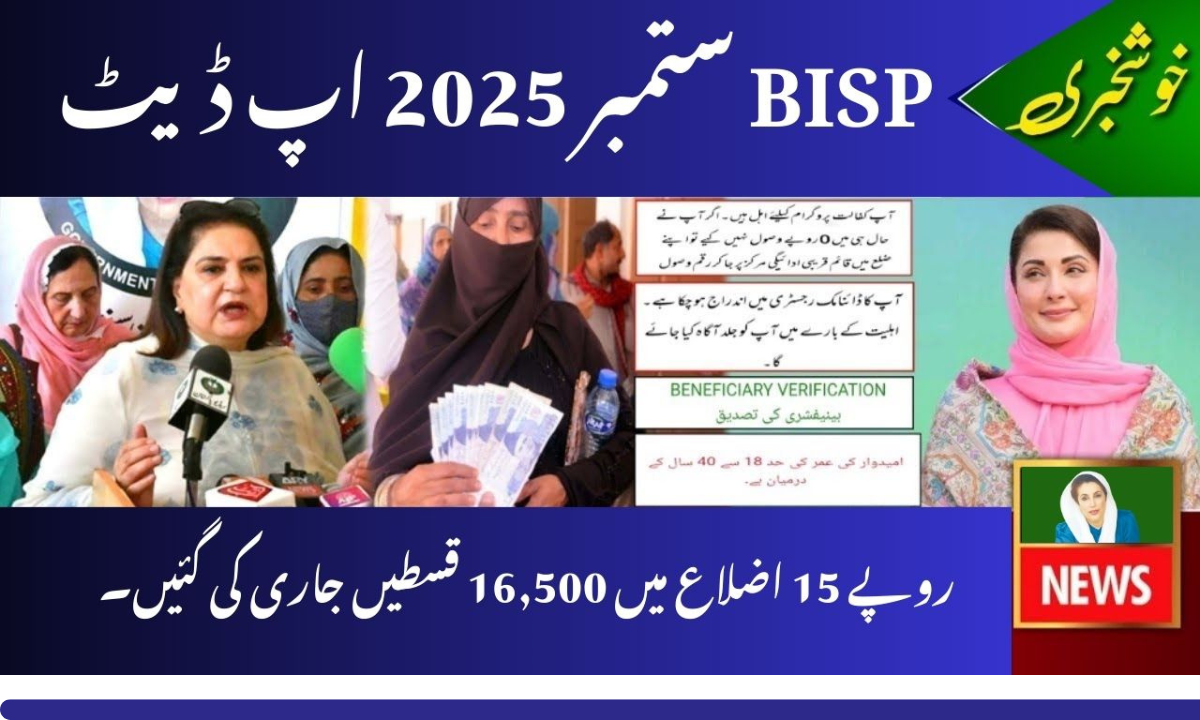
BISP Update January 2026
The Benazir Income Support Programme (BISP) is one of Pakistan’s flagship social welfare initiatives, aiming to provide financial support to deserving families across the country. Over the years, the program has evolved into a key pillar for poverty alleviation, focusing particularly on supporting women as primary beneficiaries. In January 2026, the BISP announced a significant update regarding the disbursement of payments. Specifically, 15 districts received installments of Rs. 16,500, a notable increase from previous allocations. This move is part of the program’s continued efforts to address economic challenges, especially in the wake of inflation and rising living costs.
Also Read:CM Punjab Parwaz Card Registration
The January 2026 update represents a strategic initiative to ensure timely support for families in need. Official reports indicate that these payments were released as early as 15th January 2026, demonstrating BISP’s commitment to punctuality and efficiency in fund distribution. By focusing on selected districts, the program can target regions with higher concentrations of vulnerable populations, ensuring that the most deserving beneficiaries receive assistance without unnecessary delays.
The BISP operates with a structured framework that prioritizes transparency and accountability. Beneficiaries are registered through the program’s digital systems, ensuring that payments are transferred directly to eligible recipients. This reduces the risk of delays or mismanagement and guarantees that funds reach those who need them most. In addition, the emphasis on women beneficiaries underscores the program’s gender-sensitive approach. Women, often responsible for household management and family welfare, are empowered through these payments, allowing them to contribute directly to the financial stability of their households.
The process of disbursing the Rs. 16,500 installments involves multiple steps, including beneficiary verification, fund allocation, and communication of payment dates. BISP ensures that eligible families are informed through various channels, including SMS notifications, local community centers, and official websites. Such measures help beneficiaries track payments and plan their household budgets accordingly. The release of these installments early in the month further assists families in meeting essential needs, such as groceries, education, healthcare, and utility bills.
The 15 districts selected for the January 2026 payments were chosen based on socio-economic criteria, including poverty levels, population density, and historical reliance on BISP support. This targeted approach ensures that resources are allocated efficiently, maximizing the program’s impact. Local BISP offices coordinate closely with district authorities to facilitate smooth payments, while also addressing any concerns or queries from beneficiaries. This collaboration enhances operational efficiency and strengthens trust between the community and the program.
The financial support provided by BISP has far-reaching implications beyond immediate relief. By injecting funds directly into households, the program stimulates local economies and encourages spending on essential goods and services. Families receiving these installments are better able to meet their daily needs, pay for education, and address healthcare requirements, thereby contributing to overall socio-economic development. Furthermore, consistent support over time can help reduce reliance on informal lending sources, which often carry high interest rates and can exacerbate financial hardship.
BISP’s approach to prioritizing women as primary recipients is particularly impactful. Empowering women financially has been shown to improve household decision-making, children’s education, and overall family well-being. In many rural and underprivileged areas, women are the main caretakers and managers of household resources. By directing funds to them, the program strengthens household resilience, promotes gender equality, and enhances social welfare outcomes.
The administration of these payments also incorporates modern technology to ensure efficiency and security. Digital platforms, biometric verification, and secure mobile banking channels reduce the risk of fraud and misallocation. Beneficiaries can easily receive their funds through digital wallets, local bank branches, or designated payment centers. This seamless integration of technology helps BISP maintain transparency and accountability while simplifying access for recipients.
Community engagement remains a cornerstone of BISP’s operations. Awareness campaigns, local workshops, and collaboration with community leaders ensure that beneficiaries understand their entitlements and the process for receiving payments. This approach not only increases participation rates but also minimizes errors during registration and fund disbursement. By educating communities, BISP fosters a culture of trust and ensures that financial support reaches the intended recipients efficiently.
Also Read:Step-by-Step Guide to Verify Your
Frequently Asked Questions
Who is eligible to receive the Rs. 16,500 BISP installment in January 2026?
Eligible beneficiaries are registered families under BISP, with a focus on women as primary recipients. Selection is based on socio-economic criteria and verification through official BISP records.
How will beneficiaries receive the payments?
Payments can be received through digital wallets, local bank branches, or designated payment centers. Beneficiaries are informed of the payment method and schedule through SMS and official notifications.
Can beneficiaries check their payment status?
Yes, beneficiaries can track their payment status online through the BISP portal, via SMS notifications, or by contacting local BISP offices for updates.
Why are only 15 districts receiving payments in January 2026?
The program targets specific districts based on poverty levels, population density, and historical reliance on BISP support. This ensures that resources are efficiently allocated to the most deserving families.
What impact does receiving these installments have on families?
Receiving the Rs. 16,500 installment helps families meet daily needs, cover education and healthcare expenses, reduce financial stress, and strengthen household resilience. The program also empowers women and stimulates local economies.
Also Read:How To Get Rashan Package
Conclusion
The BISP January 2026 update, with Rs. 16,500 installments released in 15 districts, reflects the program’s commitment to alleviating poverty and supporting vulnerable families across Pakistan. By prioritizing women as primary beneficiaries and ensuring timely disbursement of funds, BISP strengthens household financial stability, promotes social welfare, and contributes to broader economic development.
The targeted approach of focusing on specific districts ensures that resources reach those who need them most, while modern technology and community engagement enhance efficiency and transparency. By empowering women and providing consistent financial support, the program not only addresses immediate needs but also encourages long-term resilience and socio-economic progress.
Through these continued efforts, BISP remains a vital instrument for poverty alleviation, gender empowerment, and community development, demonstrating the importance of structured social welfare programs in improving the lives of Pakistani citizens.