
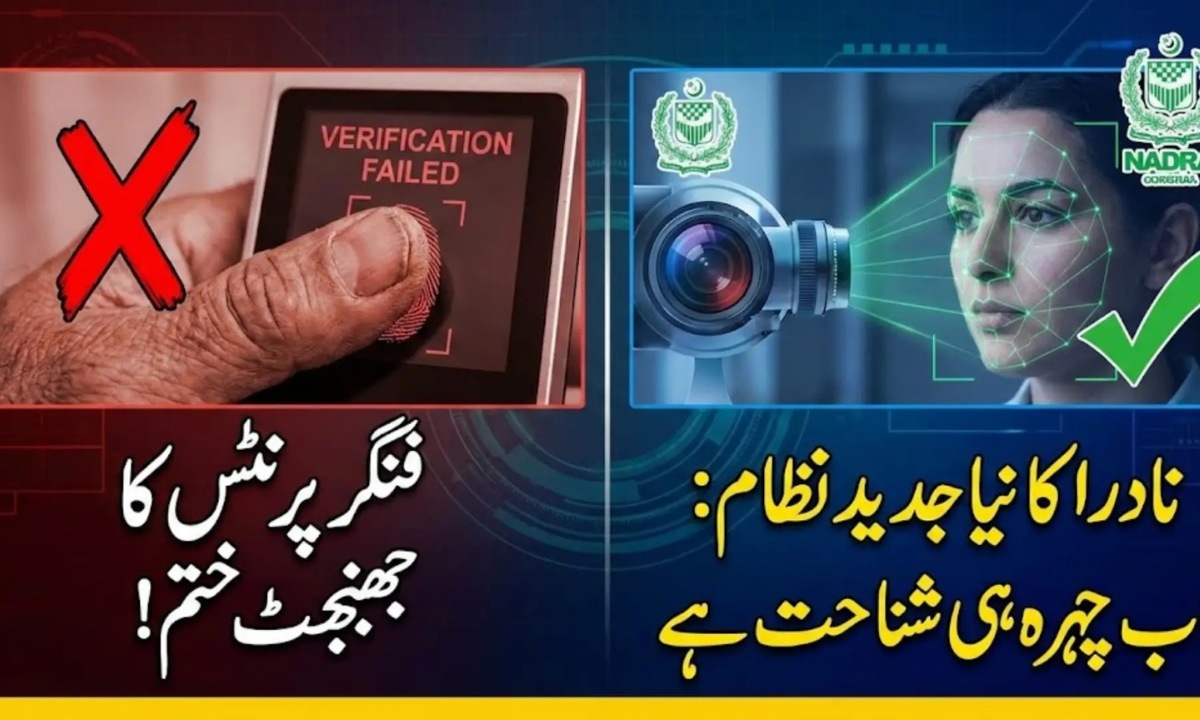
NADRA Introduces Facial Recognition
The National Database and Registration Authority has taken a major technological step by introducing a facial recognition biometric system. This new system is designed to resolve long-standing fingerprint verification problems faced by millions of citizens across Pakistan. Over the years, fingerprint-based biometric verification caused difficulties for elderly individuals, laborers, and people with worn or unclear fingerprints. The introduction of facial recognition aims to modernize identity verification and improve service delivery nationwide.
Also Read:How To Resolve BISP-Blocked

Background of Fingerprint Verification Challenges
Fingerprint verification has been the backbone of NADRA’s biometric system for decades. However, many citizens experienced repeated failures due to damaged fingerprints caused by manual labor, aging, or medical conditions. These issues often resulted in delays in accessing essential services such as CNIC issuance, BISP payments, SIM verification, and banking transactions. Complaints regarding fingerprint mismatches increased significantly, prompting NADRA to search for an alternative solution.
Problems with Fingerprint Verification
Fingerprint verification has caused difficulties for many citizens due to worn, damaged, or unclear fingerprints. These issues often resulted in delays in accessing essential services such as CNIC issuance, banking, and welfare payments.
How Facial Recognition Technology Works
The facial recognition system identifies individuals by analyzing facial features using advanced algorithms. It matches live facial images with NADRA’s database to ensure accurate and fast verification.
Impact on Welfare Programs
Facial recognition helps reduce payment delays in social welfare programs like BISP. Beneficiaries can receive financial assistance smoothly without biometric verification issues.
Security and Data Protection
NADRA ensures that all facial data is encrypted and stored securely. Strict privacy policies and access controls are applied to protect citizens’ personal information.
Future Expansion of the System
NADRA plans to expand facial recognition technology to banks, telecom services, and other government departments. This will support digital transformation and e-governance in Pakistan.
Introduction of Facial Recognition Technology
Facial recognition technology uses advanced algorithms to identify individuals by analyzing facial features such as eye structure, nose shape, jawline, and facial symmetry. NADRA’s new system captures a live facial image and matches it with stored data in its database. This process reduces dependency on fingerprints and ensures accurate identification even when fingerprints are unclear or unavailable.
How the Facial Recognition System Works
The facial recognition system operates through high-resolution cameras installed at NADRA registration centers and authorized service points. When a citizen appears for verification, the system captures a facial image and compares it with the existing NADRA database. Artificial intelligence and machine learning algorithms process the data within seconds, providing instant verification results. This system works in real time and is designed to function efficiently even in crowded environments.
Benefits for Citizens and Government Services
The new facial recognition system offers multiple benefits for both citizens and government institutions. Citizens experience faster verification, fewer rejections, and reduced stress during registration or payment collection. Government departments benefit from improved accuracy, reduced fraud, and smoother service operations. This advancement also supports inclusive access by assisting elderly citizens, persons with disabilities, and daily wage workers.
Impact on BISP and Social Welfare Programs
One of the most significant impacts of facial recognition is on social welfare programs such as the Benazir Income Support Programme. Many beneficiaries previously faced payment delays due to fingerprint mismatches at payment centers. Facial recognition ensures smoother payment verification, allowing deserving families to receive financial assistance without unnecessary hurdles. This step strengthens transparency and trust in welfare distribution systems.
Also Read:How to Check Your Recent Benazir Kafaalat Payment via 8171 Web Portal
Security and Privacy Measures
NADRA has emphasized that data security and privacy remain top priorities. Facial data is encrypted and stored securely within NADRA’s protected databases. The system complies with national data protection laws and international security standards. Access to biometric information is strictly controlled, ensuring that personal data is not misused or shared without authorization.
Integration with Existing NADRA Systems
The facial recognition system has been integrated with NADRA’s existing digital infrastructure. This allows seamless coordination between fingerprint verification and facial recognition, providing a dual verification mechanism. In cases where fingerprints fail, facial recognition automatically serves as an alternative without requiring additional steps from citizens. This hybrid approach enhances reliability and operational efficiency.
Future Expansion and Digital Transformation
NADRA plans to expand facial recognition technology to banks, telecom companies, immigration checkpoints, and other public service platforms. This move aligns with Pakistan’s broader digital transformation strategy and e-governance initiatives. In the future, citizens may be able to verify their identity remotely through secure digital channels, reducing the need for physical visits and paperwork.
Frequently Asked Questions
Why did NADRA introduce facial recognition technology?
NADRA introduced facial recognition to address fingerprint verification failures and improve accuracy, speed, and accessibility for citizens facing biometric issues.
Who will benefit most from the facial recognition system?
Elderly individuals, laborers, persons with disabilities, and citizens with unclear fingerprints will benefit the most from this technology.
Is facial recognition mandatory for all services?
No, facial recognition works as an alternative to fingerprint verification. Both systems operate together to ensure successful identification.
Is facial recognition data safe and secure?
Yes, NADRA uses encrypted storage, controlled access, and strict security protocols to protect facial biometric data.
Will facial recognition be used outside NADRA offices?
Yes, NADRA plans to extend this system to banks, telecom services, welfare programs, and other government platforms.
Also Read:Ehsaas Student Program: Waseela-E-
Conclusion
The introduction of the facial recognition biometric system by NADRA marks a significant advancement in Pakistan’s identity verification framework. By addressing the long-standing challenges associated with fingerprint verification, this technology ensures faster, more accurate, and more inclusive access to essential services for citizens. It particularly benefits individuals who previously faced repeated verification failures due to unclear or damaged fingerprints.
With strong security measures, seamless integration into existing systems, and plans for future expansion, NADRA’s facial recognition initiative reflects a forward-looking approach to digital governance. This step not only improves service efficiency and transparency but also strengthens public trust, paving the way for a more reliable and citizen-friendly biometric verification system across Pakistan.