
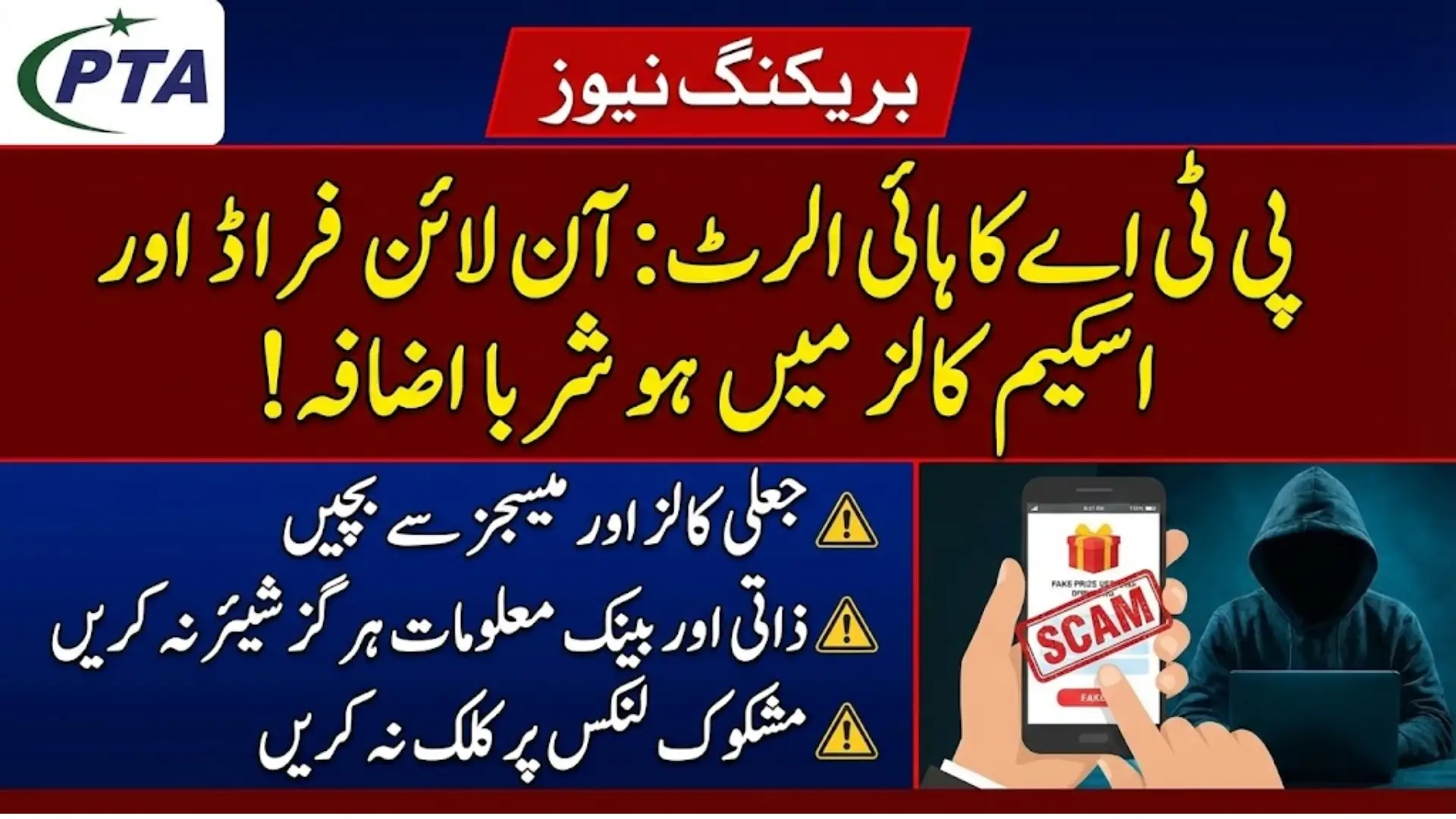
PTA Warns Public Against Rising Scam
The Pakistan Telecommunication Authority has issued a fresh warning to citizens after a noticeable rise in scam calls and online fraud across the country. According to the advisory, fraudsters are using phone calls, messages, and online links to deceaive people into sharing sensitive personal and financial information. These activities have increased concerns about digital safety and financial security.
Also Read:8171 Registration Form Online Apply 2026 Complete

The authority has urged the public to stay alert and cautious while dealing with unknown callers. With more people relying on mobile phones and digital services, scammers are exploiting trust and lack of awareness, making public education and timely reporting more important than ever.
PTA Warns Public Against Scam Calls and Online Fraud
PTA Warns Public Against Scam Calls after observing an increase in fraudulent activities targeting mobile users. The regulator stated that scammers often pretend to represent trusted organizations or claim prize winnings to gain the confidence of victims. These deceptive tactics are designed to pressure individuals into acting quickly without verification.
The authority highlighted that once personal or banking details are shared, victims may face financial losses and identity misuse. PTA emphasized that no legitimate organization asks for confidential information through unsolicited calls or messages.
Key concerns highlighted by PTA include:
- Increase in scam calls and online fraud
- Fake prize and reward claims
- Risk to personal and financial data
Common Scam Techniques Identified by PTA
Fraudsters are using a variety of techniques to mislead citizens. PTA explained that scam calls often include false promises, urgent warnings, or requests to click suspicious links. These links may lead to fake websites designed to steal personal information or install malicious software.
Another common tactic involves callers asking for bank account details, OTP codes, or CNIC numbers under false pretenses. Such information can be misused for unauthorized transactions or identity theft, causing long-term damage to victims.
Common scam methods include:
- Calls claiming prize winnings or rewards
- Messages with malicious or fake links
- Requests for banking or personal details
Also Read:Maryam Nawaz Cancels Basant Activities After
PTA Safety Guidelines for Citizens
The Pakistan Telecommunication Authority has issued clear guidelines to help citizens protect themselves from scam calls and online fraud. The advisory stresses the importance of never sharing sensitive information with unknown callers, regardless of how convincing they may sound.
PTA also advised users to avoid clicking on suspicious links received through calls or messages. Staying cautious and verifying information through official channels can significantly reduce the risk of falling victim to scams.
PTA safety advice includes:
- Do not share bank or personal information
- Avoid clicking on unknown or suspicious links
- Disconnect calls from unverified numbers
How to Report Scam Calls and Online Fraud to PTA
PTA encourages citizens to report any suspected scam calls or fraudulent activity immediately. Early reporting helps authorities take action against scammers and prevents further harm to others. Complaints can be submitted using official PTA platforms.
The authority has made reporting easier through its online complaint portal and the PTA CMS mobile application. These tools allow users to share details of fraudulent calls quickly and securely.
Reporting options provided by PTA:
- PTA official complaint portal
- PTA CMS mobile application
FIA and State Bank Helplines for Fraud Complaints
For cases involving cybercrime, PTA has advised citizens to contact the Federal Investigation Agency. The FIA helpline 1799 is dedicated to handling cyber-related offenses, including online scams and digital fraud.
In cases of financial or mobile banking fraud, victims should contact the State Bank of Pakistan. Reporting such incidents to the SBP helpline at 111 727 273 helps limit financial losses and supports investigation efforts.
Fraud reporting authorities:
Authority Helpline Purpose
FIA 1799 Cybercrime and online fraud
State Bank of Pakistan 111 727 273 Banking and financial fraud
Importance of Public Awareness Against Online Fraud
PTA emphasized that public awareness plays a vital role in controlling the spread of scams. When citizens understand common fraud tactics, they are less likely to fall victim to deceptive calls and messages. Awareness also encourages responsible digital behavior.
The authority believes that collective vigilance can significantly reduce fraud cases. By staying informed and reporting suspicious activity, citizens contribute to a safer digital environment for everyone.
Benefits of public awareness include:
- Reduced financial losses
- Protection of personal identity
- Stronger digital security culture
FAQs
What warning has PTA issued to the public?
PTA warned citizens about the rising number of scam calls and online fraud targeting personal and financial information.
What should people avoid during scam calls?
Citizens should avoid sharing banking details, CNIC numbers, or clicking on suspicious links from unknown sources.
How can scam calls be reported to PTA?
Scam calls can be reported through the PTA complaint portal or the PTA CMS mobile application.
Which authority handles cybercrime complaints?
Cybercrime cases should be reported to the Federal Investigation Agency via helpline 1799.
Where should banking fraud be reported?
Financial and mobile banking fraud should be reported to the State Bank of Pakistan helpline at 111 727 273.
Also Read:Gold Prices in Pakistan Today Drop Sharply
Conclusion
PTA Warns Public Against Scam Calls as online fraud continues to pose a serious threat to digital and financial security in Pakistan. The advisory highlights the need for caution, awareness, and responsible use of communication channels when dealing with unknown callers.
By following PTA’s guidelines and reporting suspicious activities promptly, citizens can help reduce fraud and protect themselves from potential losses. Staying informed and vigilant remains the strongest defense against scam calls and online fraud.