
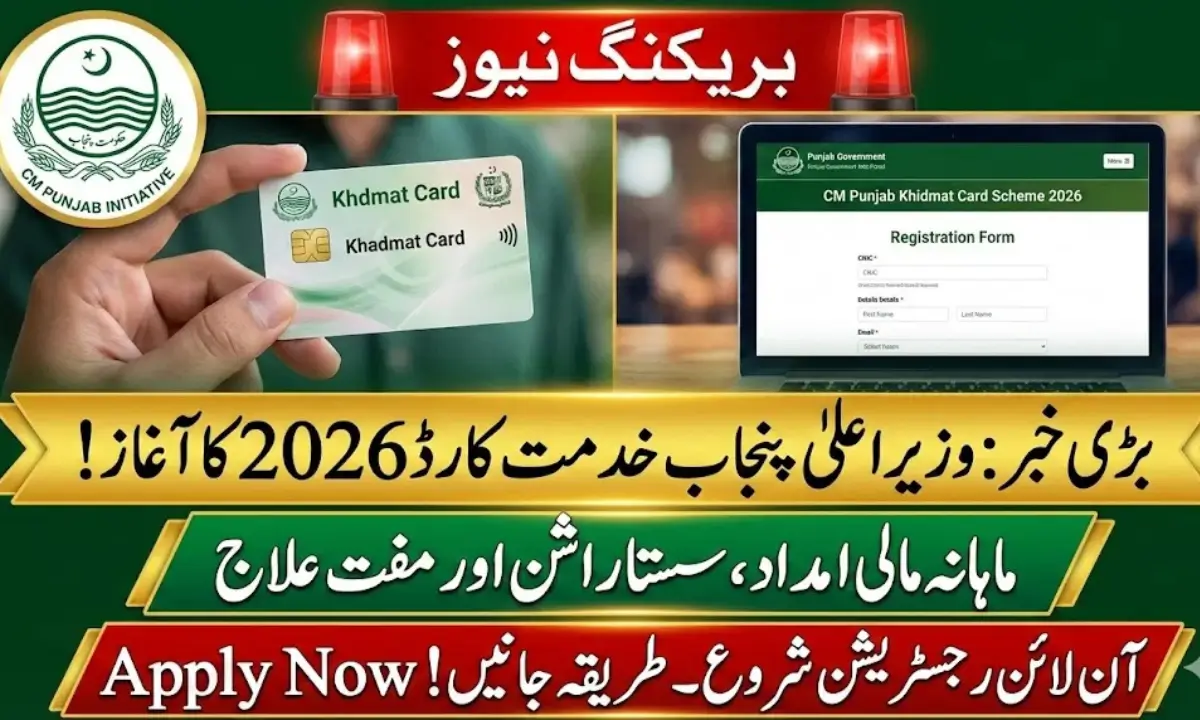
Punjab Government New Scheme
The Government of Punjab has always been proactive in introducing welfare schemes to uplift the living standards of its citizens. In 2026, the provincial government has launched several new initiatives targeting vulnerable populations, women, youth, elderly, and small business owners. These programs are designed to provide financial relief, promote skill development, and improve social welfare. This article provides a comprehensive overview of the latest welfare schemes introduced by the Punjab Government in 2026.
Also Read:Ehsaas Program 2026 Registration – CNIC Check & Latest Payment Updates
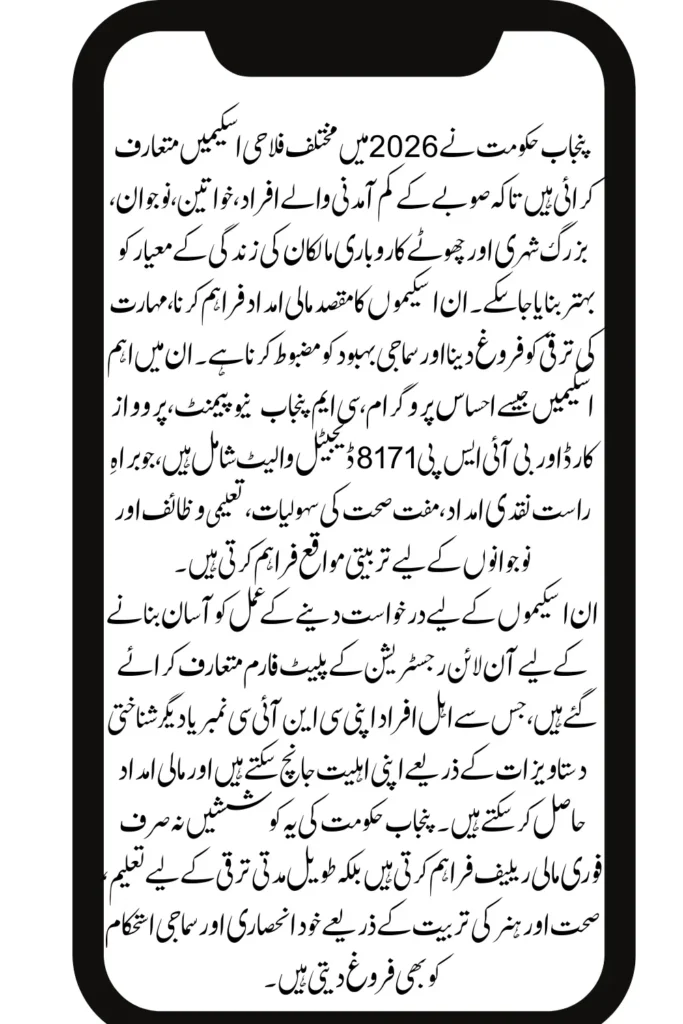
The Government of Punjab has consistently focused on social welfare programs to address poverty, unemployment, and social inequality. With the rising cost of living and economic challenges in Pakistan, welfare programs have become essential tools for supporting low-income families. In 2026, the government has expanded its welfare programs, introducing innovative approaches such as digital registration, interest-free loans, and direct cash transfers.
These programs aim to provide a structured and transparent method of assistance, ensuring that the aid reaches the people who need it the most. Additionally, special emphasis is placed on empowering women, youth, and marginalized communities, promoting self-reliance and skill development across the province.
Key Welfare Programs Launched in 2026
In 2026, the Punjab Government launched multiple welfare schemes under different categories such as financial assistance, youth empowerment, education support, healthcare, and entrepreneurship promotion. Some of the most significant programs include:
2.1 Ehsaas Program 2026 – CNIC-Based Cash Assistance
The Ehsaas Program continues to be one of the most effective poverty alleviation initiatives in Pakistan. In 2026, the Punjab Government has expanded this program to provide direct cash assistance to eligible low-income families.
Key features:
- Beneficiaries can check eligibility using their CNIC numbers.
- Monthly cash support ranges from PKR 12,000 to 15,000 depending on the household size.
- Women-headed households and vulnerable individuals are given priority.
- The program aims to reduce financial burdens and promote social stability.
2.2 CM Punjab New Payment 2026
The CM Punjab New Payment 2026 initiative provides timely financial assistance to citizens facing economic hardships. This program primarily targets:
- Low-income families
- Elderly citizens
- Small business owners
- Women-headed households
The program focuses on transparency and efficiency, using online registration portals to ensure faster disbursement of funds.
2.3 Parwaz Card 2026
The Parwaz Card 2026 is a groundbreaking program designed to empower youth and skilled individuals in Punjab. The initiative provides:
- Interest-free loans for small businesses
- Skill development training
- Financial support for career advancement
By offering access to financial resources and professional guidance, the Parwaz Card helps young individuals achieve financial independence and professional growth.
2.4 BISP 8171 Digital Wallet Registration 2026
The Benazir Income Support Programme (BISP) 8171 Digital Wallet system modernizes financial aid distribution for eligible families. Key aspects include:
- Cash assistance directly transferred to digital wallets
- Faster, more transparent payments
- Reduced dependency on manual verification and paperwork
This digital initiative ensures that vulnerable families receive timely support, avoiding delays in critical financial assistance.
2.5 CM Punjab Parwaz Card Youth Empowerment Program
In addition to financial support, the Parwaz Card program also emphasizes youth empowerment. Key benefits include:
- Career guidance and mentorship
- Opportunities for vocational and technical training
- Promotion of entrepreneurship and start-up culture
This initiative addresses unemployment challenges in the province and encourages youth to contribute positively to the economy.
Health and Education Welfare Schemes
The Punjab Government has also introduced targeted schemes in the areas of healthcare and education:
- Health Welfare Cards: Free access to essential healthcare services for low-income families.
- Education Stipends: Scholarships and stipends for students from underprivileged backgrounds to ensure continued access to quality education.
These programs aim to reduce long-term social disparities and ensure sustainable development for all citizens.
Also Read:Benazir Income Support Programme Payment – How to Check BISP Amount Online
How to Apply for Punjab Government Welfare Programs
Application processes for these schemes have been simplified with digital registration portals. Citizens can apply by:
- Visiting official government websites for the respective programs.
- Entering CNIC or relevant identification details to check eligibility.
- Submitting required documents, such as proof of income, household information, or educational certificates.
- Following up online to track the status of applications and payments.
Digital platforms ensure transparency, minimize fraud, and save time for both citizens and government officials.
Eligibility Criteria for Welfare Programs
While each program has specific eligibility requirements, common criteria include:
- Residency in Punjab Province
- Low-income or marginalized household status
- Women-headed households and elderly citizens
- Students, youth, or skilled professionals for educational and entrepreneurship programs
By establishing clear eligibility rules, the government ensures that the programs benefit the people who need them most.
Benefits of Punjab Government Welfare Schemes
The welfare programs introduced in 2026 offer multiple benefits:
- Financial Relief: Direct cash transfers alleviate economic pressure for low-income families.
- Youth Empowerment: Skill development and financial assistance help young people achieve career growth.
- Women Empowerment: Targeted programs ensure women have access to financial resources and training.
- Healthcare Access: Subsidized health services improve quality of life for marginalized communities.
- Education Support: Scholarships and stipends enable students from underprivileged backgrounds to continue their studies.
These benefits collectively contribute to sustainable social development and economic stability in Punjab.
Challenges and Solutions
Despite their success, welfare programs face challenges, such as:
- Fraud and duplication: Digital verification and CNIC checks help minimize fraudulent claims.
- Awareness issues: Government campaigns and community outreach programs ensure citizens are informed about available schemes.
- Limited coverage: The government continuously expands programs to include more beneficiaries each year.
By addressing these challenges, Punjab aims to make welfare programs more efficient and impactful.
Future Plans for Welfare Programs
The Punjab Government is committed to enhancing the scope and impact of welfare initiatives in the coming years. Plans include:
- Expanding digital wallet services for faster payments
- Introducing new skill development centers for youth and women
- Increasing financial support for healthcare and education programs
- Launching entrepreneurship incubators to boost small businesses
These initiatives indicate a long-term strategy to reduce poverty, promote self-reliance, and improve living standards across Punjab.
Also Read:CM Punjab Scheme 2026 – Complete Details, Benefits & Online Registration
Conclusion
The Punjab Government’s welfare schemes for 2026 reflect a holistic approach to social development. From direct cash assistance under Ehsaas Program to youth empowerment through Parwaz Card, these initiatives cover multiple aspects of citizen welfare. By leveraging digital technologies and emphasizing transparency, Punjab ensures that aid reaches the deserving population efficiently.
These programs not only provide immediate financial relief but also promote long-term empowerment through education, skill development, and healthcare support. With continued expansion and innovation, Punjab’s welfare schemes serve as a model for sustainable social welfare in Pakistan, demonstrating a commitment to improving the quality of life for all its citizens.