
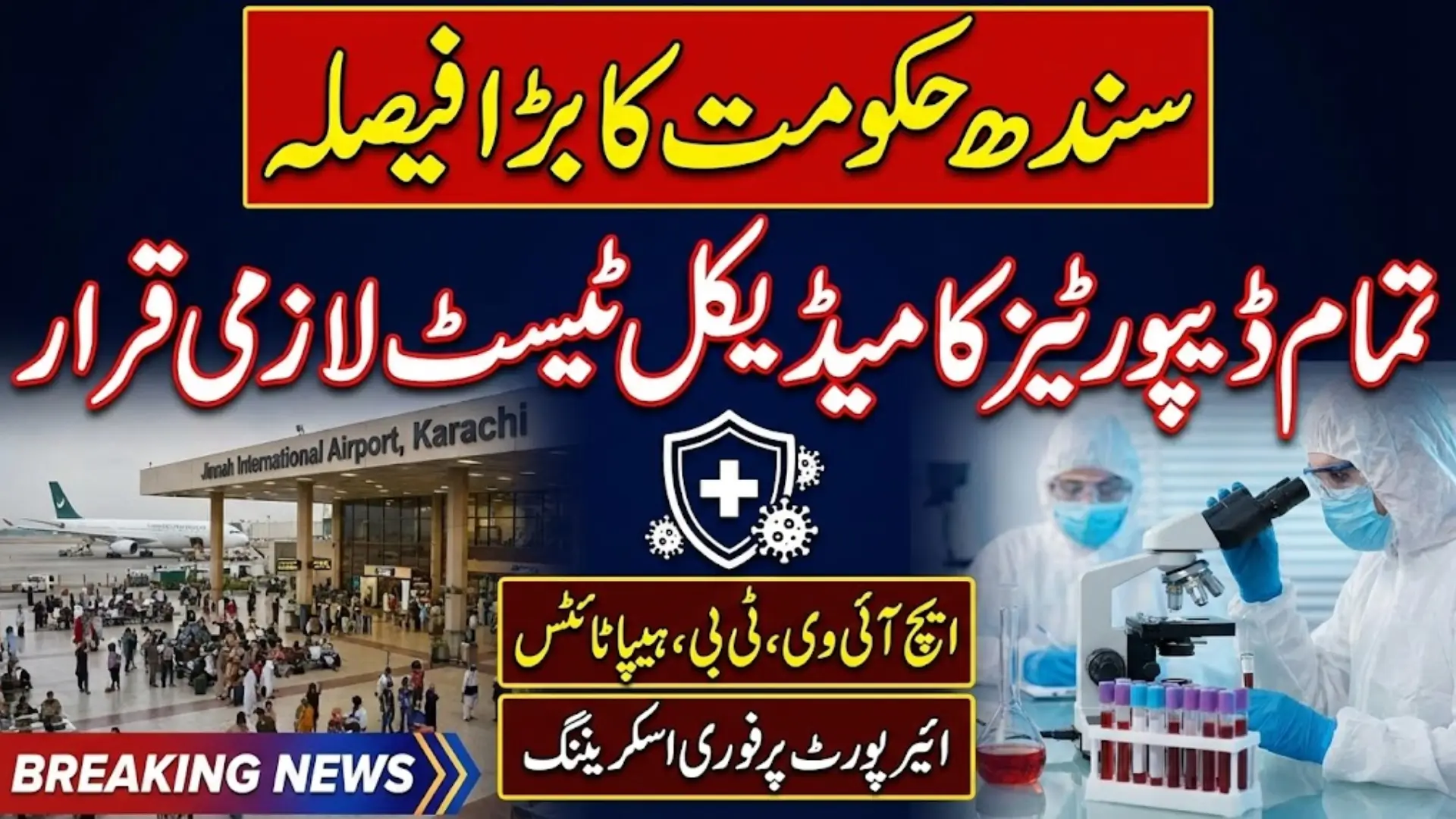
Sindh Introduces Mandatory Tests
The Sindh government has introduced mandatory health screening for deportees arriving at entry points across the province. Under this new policy, all deportees will be tested for HIV, tuberculosis, and hepatitis B and C to reduce the risk of undetected infectious diseases spreading into the general population. The decision comes amid growing public health concerns linked to the increasing number of returning deportees.
Also Read:Karobar Card By Maryam Nawaz
Health officials report that a significant number of deportees arrive without prior medical testing. With daily arrivals at Karachi’s main airport and tens of thousands of returnees over recent years, authorities believe early detection and immediate response are essential to protect public health.
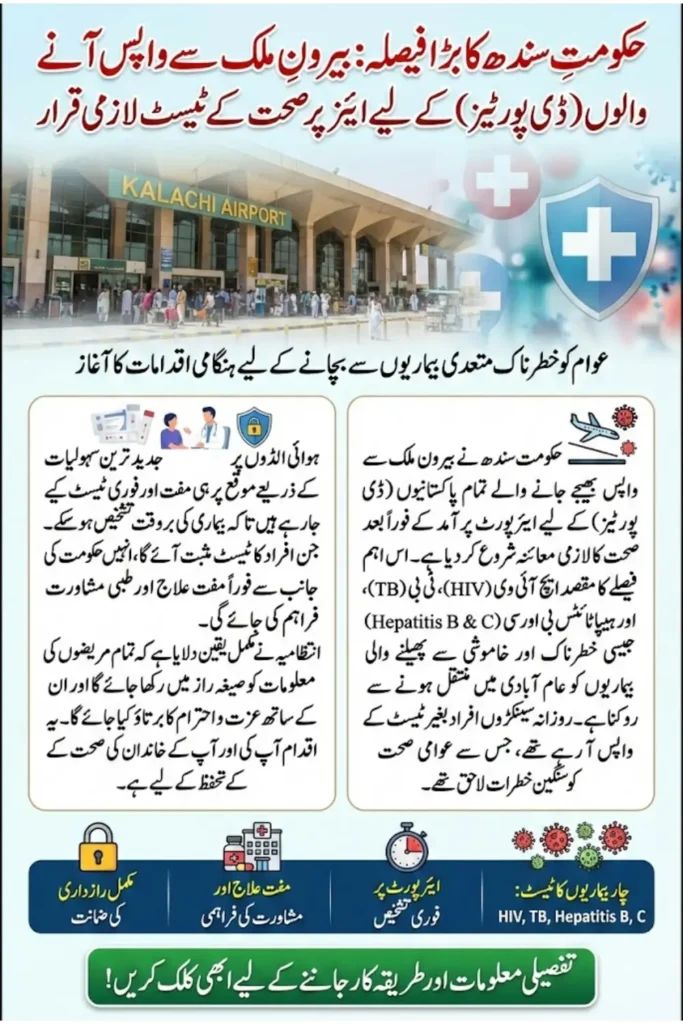
Sindh Mandatory Health Screening for Deportees at Entry Points
Sindh Mandatory Health Screening for Deportees is being implemented at key entry points, including Jinnah International Airport in Karachi. Health officials estimate that around 150 to 200 deportees arrive daily, many of whom have not undergone health checks before returning to Pakistan.
Over the past few years, approximately 50,000 deportees have entered the country through various points. This volume raised concerns among health authorities about the silent spread of infectious diseases, prompting the government to introduce compulsory screening measures.
Key entry point details include:
- Screening at major airports and arrival locations
- Daily arrival of 150 to 200 deportees at Karachi airport
- Monitoring of long-term deportee inflow
Diseases Covered Under Sindh Mandatory Health Screening for Deportees
Under the Sindh Mandatory Health Screening for Deportees policy, all returnees will be tested for HIV, tuberculosis, and hepatitis B and C. These diseases were selected due to their long-term health impact and potential for silent transmission within communities.
Health experts emphasize that early diagnosis can significantly reduce complications and prevent further spread. Rapid testing methods allow officials to identify cases immediately and take timely action.
Diseases included in the screening process:
- HIV
- Tuberculosis (TB)
- Hepatitis B
- Hepatitis C
Table: Diseases and Screening Methods
Also Read:Ministry of Defense Jobs 2026 Hundreds
| Disease | Screening Method | Purpose |
|---|---|---|
| HIV | Rapid blood test | Early detection |
| TB | X-ray screening | Identify active cases |
| Hepatitis B | Rapid test | Prevent transmission |
| Hepatitis C | Rapid test | Early treatment |
On-the-Spot Testing and Treatment Support
The Sindh government has introduced on-the-spot testing for deportees to ensure immediate results. Individuals who test positive will be directly linked to treatment and counselling programs, reducing delays in care and follow-up.
This approach not only supports affected individuals but also strengthens disease control by ensuring cases are managed quickly and responsibly within the healthcare system.
Support measures include:
- Immediate testing upon arrival
- Referral to treatment facilities
- Counselling and medical guidance
Healthcare Preparedness and Staff Training
To implement Sindh Mandatory Health Screening for Deportees effectively, the provincial health department has equipped its teams with modern medical resources. These include rapid test kits, X-ray facilities, and personal protective equipment to ensure safe and efficient screening.
Specialized training has also been provided to healthcare staff to conduct screenings professionally and respectfully. Authorities have stressed that all procedures must be carried out with dignity, ensuring deportees feel supported rather than targeted.
Preparedness measures include:
- Availability of rapid diagnostic kits
- Use of protective equipment
- Specialized training for screening staff
Confidentiality and Privacy Assurance
Maintaining confidentiality is a core component of the Sindh Mandatory Health Screening for Deportees initiative. Health officials have assured that all medical information will remain private to protect individuals from stigma or discrimination.
Dr. Zafar Mehdi, the focal person for communicable diseases at Karachi airport, stated that strict confidentiality protocols are in place. These measures aim to encourage cooperation and trust among deportees undergoing screening.
Coordination With Law Enforcement Agencies
The Sindh government has coordinated with the Federal Investigation Agency and other relevant authorities to ensure smooth implementation of the screening policy. This coordination helps manage arrivals efficiently while ensuring compliance with health protocols.
In addition to mandatory screening for deportees, authorities have also encouraged voluntary testing for other travelers, further strengthening disease surveillance and prevention efforts.
Table: Agencies Involved in Implementation
| Agency | Role |
|---|---|
| Sindh Health Department | Screening and treatment |
| FIA | Coordination at entry points |
| Airport Authorities | Logistical support |
Public Health Objectives of the Policy
The primary goal of Sindh Mandatory Health Screening for Deportees is to protect public health by identifying infectious diseases early. By detecting cases at entry points, authorities aim to reduce long-term healthcare burdens and prevent community-level transmission.
This policy also reflects a broader strategy to strengthen disease surveillance and ensure that returning citizens receive timely medical attention when needed.
Main objectives include:
- Preventing disease spread
- Strengthening public health monitoring
- Supporting deportees with early treatment
The Government of Sindh has announced that digital health records will now be linked with the national database to improve follow-up care and monitoring of screened individuals. Authorities at Jinnah International Airport have also increased medical staff to handle the growing number of daily arrivals efficiently and reduce waiting times.
FAQs
What is Sindh Mandatory Health Screening for Deportees?
It is a government policy requiring deportees to undergo testing for HIV, TB, and hepatitis upon arrival in Sindh.
Where is the screening being conducted?
Screening is being carried out at entry points, including Jinnah International Airport in Karachi.
Which diseases are tested under this policy?
Deportees are tested for HIV, tuberculosis, hepatitis B, and hepatitis C.
What happens if someone tests positive?
Individuals who test positive are referred to treatment and counselling programs immediately.
Is personal medical information kept confidential?
Yes, authorities have confirmed that strict confidentiality measures are in place.
Also Read:How To Check Benazir Payment Online 2026 Complete
Conclusion
The introduction of Sindh Mandatory Health Screening for Deportees marks an important step toward safeguarding public health in the province. By implementing on-the-spot testing, ensuring confidentiality, and providing direct access to treatment, the Sindh government aims to prevent the silent spread of infectious diseases. This initiative not only protects the wider population but also ensures that returning citizens receive timely medical care and support.